

About Woodsong Therapy
Each of Us Has Many Parts
There are parts of yourself you’d rather other people didn’t see, and you’ve gotten good at leaving them outside.
The part that gets angry. The part that shuts down. The part that wants reassurance more than it wants to admit. The one that doesn’t trust anybody yet, including me.
There’s the part that wants to leave. And the part that wants someone to ask you to stay. Both of them can show up inside the same conversation, and so can the part that’s ashamed of something that happened, or of how much it’s still affecting you.
You can bring all of them in here. I’d rather meet them than a version of you that’s easier to introduce.

Bring the Difficult Parts of Yourself in with You
Those parts usually have a story, and I’d rather hear the story than the summary you’ve told everyone else.
What you’re struggling with. The ways you learned to get through it. The mistakes you’ve made along the way. I hear all of that as things that happened in a life, not as a description of the person who lived it.
So we’ll make room for complexity. You can love someone and be furious with them. Understanding why your parents behaved the way they did doesn’t erase the hurt you felt. You can want your relationship to survive and still not know whether you can forgive. And being strong has never meant you stopped needing care.
You don’t have to choose between the different parts of being human.
What You Say Isn’t the Only Thing I’m Listening To
I pay attention to what happens inside you while you’re talking, not only to the events you’re describing.
You tell me something isn’t a big deal, and your body tightens while you say it. There’s laughter in the middle of a story that isn’t funny. Or you’re angry with your partner, and underneath the anger sits hurt, or fear, or a longing to know that you matter to them.
Those moments are important. They’re usually where the real conversation starts.
Sometimes, we’ll talk. Sometimes, we’ll slow everything down and pay attention to what your body is telling you. With couples, we’ll take an argument you’ve had a hundred times and stay inside it long enough to hear what each of you is actually asking for. That’s usually what the fight was about.

Nothing You Bring Me Is Going to Make Me Flinch
Difficult emotions and complicated stories don’t rattle me, and I won’t hurry you through them. You won’t lose me by telling me the worst of it.
I’ll be engaged with you in the work: listening closely, asking questions, following what connects to what, and telling you when I see something you haven’t named yet.
Over two decades of working closely with people sit behind that, along with the perspective that comes from having lived enough life to know that people, families, and relationships are complicated.
I take this work seriously, but I don’t believe we have to take ourselves seriously every minute we’re working together.
More of You Gets to Be in the Room
Over time, the parts of you that have been working hardest can stop working quite so hard.
The angry one gets heard before it has to raise its voice. The one who shuts down doesn’t have to leave the conversation so fast. You set a boundary and tolerate the discomfort of it, ask more directly for what you need, or stay present in a hard conversation. That’s what more room looks like.
For couples, that’s recognizing the cycle between you before it takes over. Withdrawal becomes easier to read as protection rather than indifference, and you can begin reaching for each other differently.
What we’re after is more understanding and more choice in how you meet difficult emotions, conflict, and painful experiences. And more freedom to live and connect from who you are now, rather than from what you learned to do to protect yourself.

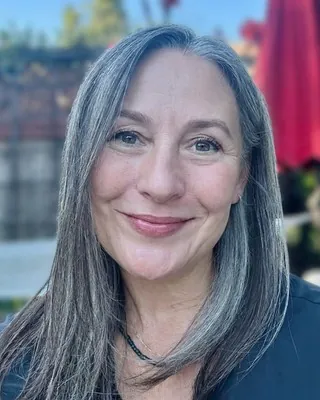
About Elizabeth Smith, LMFT
I feel incredibly lucky to do this work.
Before becoming a Marriage and Family Therapist, I spent many years as a high school counselor. Working closely with teens and families taught me a tremendous amount about relationships, development, identity, and resilience, and it taught me to ask what sits behind someone’s behavior instead of assuming I already know.
Eventually, I wanted to go further into this work than a school counseling office could accommodate. That’s what led me to Marriage and Family Therapy and eventually to Woodsong Therapy.
Trained to Stay With What You Bring
Today, I work with adults, couples, and teens with particular interests in developmental, relational, and sexual trauma, women’s issues, relationship distress, and separation, divorce, and co-parenting. My work is grounded in attachment, trauma, neuroscience, and the belief that our responses make more sense when we understand them in the context of our experiences.
I received my Master’s Degree in Clinical Mental Health Counseling from Palo Alto University, with a specialization in Marriage and Family Therapy.
As a Certified Emotionally Focused Therapist, I keep Emotionally Focused Therapy at the center of my work. With couples, I use Emotionally Focused Couples Therapy to understand and transform the attachment patterns beneath conflict and disconnection.
I’m also a Certified Clinical Trauma Professional and a trained Somatic and Attachment-Focused EMDR therapist. I’m continuing advanced training toward full EMDRIA certification. My post-master’s training includes advanced courses in Internal Family Systems Therapy and Compassion-Focused Therapy.
I keep learning and approach this work with cultural humility and respect for how identity, culture, family, relationships, community, and lived experience shape each person’s story.
When I’m Not a Therapist
Outside the office, the relationships in my own life matter enormously to me.
I love spending time with my family, lazing at the ocean, exploring the beauty of the Bay Area, and being involved in my community. I’m happiest when there’s time for connection, conversation, laughter, and probably somewhere beautiful to wander.
Those parts of my life keep me grounded and remind me that we all need meaning, relationships, belonging, rest, laughter, beauty, and places where we can simply be ourselves.
And I bring that understanding back into the therapy room.

Tell Me What’s Going On
Whichever part of you is reading this, the hopeful one or the one that’s already certain this won’t help, both are welcome.
Ask me for a free consultation, and tell me what’s going on. Even if what’s going on is, “I don’t even know where to start.”
Let’s meet for a free consultation, and we’ll start from where you are.
- Call(707) 953-0790
- Emailesmith@woodsongtherapy.net
- Office659 Cherry Street, Santa Rosa, CA 95404